Thursday, October 04, 2007

Vulnerable germ labs tough to identify

WASHINGTON - Federal terror-fighting agencies can't identify all the American research laboratories that could become targets of attackers, congressional investigators have found.

The Government Accountability Office asked a dozen agencies whether they kept track of all the labs handling dangerous germs and toxins, or knew the number. All responded negatively.

Combine this with the previous story

WASHINGTON - American laboratories handling the world's deadliest germs and toxins have experienced more than 100 accidents and missing shipments since 2003, and the number is increasing steadily as more labs across the country are approved to do the work.


The findings were prepared for a House Energy and Commerce Committee hearing Thursday.

The government regulates 409 laboratories approved to work with 72 of the world's deadliest organisms and poisons, including anthrax, bird flu virus, monkeypox and plague-causing bacteria.

But less is known about other labs that work with organisms that cause whooping cough, tuberculosis, gonorrhea, meningitis, typhoid fever, hepatitis, herpes, several strains of flu, rabies, HIV and SARS.

The GAO said U.S. intelligence agencies, including the FBI, told its investigators they need to track all labs that could be vulnerable to terrorism.

U.S. intelligence agencies said they already are handicapped by the failure of some foreign countries to regulate the shipment or possession of biological agents.

The Associated Press reported this week that American laboratories handling the world's deadliest germs and toxins have experienced more than 100 accidents and missing shipments since 2003, and the number is increasing as more labs do the work.


link to full article


When Thinking about 21st Century Biotech, Don’t Overlook Georgia

another region weighing into the biotech industry as the source of new jobs...

RESEARCH TRIANGLE PARK - Quick quiz: Which state does this phrase most apply:

“21st Century Bioeconomy”

North Carolina comes to mind. California, certainly. Massachusetts, of course.

What about Georgia?

Yes, the Peach State is conceding no ground in development of a biotech industry with applications in pharmaceutical development, biofuels and much more. For example, last month, state and local officials announced plans to turn part of U.S. Army base Fort McPherson into a biotech campus.

The goal: Produce a technology hub similar to Research Triangle Park or MIT.

While North Carolina justifiably takes pride in its booming biotech industry (more than 400 companies, more than 40,000 jobs), leaders in the biotech sector constantly warn that the state can’t take the sector for granted. Other states – especially Georgia – have targeted life sciences and biotech as major economic growth objectives.

Georgia’s drive was highlighted this week at the annual Georgia Bio conference and the release of the Georgia Bio organization’s second annual report on the state’s life science sector. It’s title speaks to Georgia’s public and private sector commitment to biotech: “Shaping Infinity.”

link to full article


Wednesday, October 03, 2007

Novartis And MIT Study Drug Production

Maybe we can all get some new work in bulk API production...

Ten-year agreement targets continuous pharmaceutical manufacturing

Novartis and MIT have launched a partnership aimed at transforming pharmaceutical manufacturing. Novartis hopes the pact will allow it to convert its drug production infrastructure from multisite batch operations to continuous ones that consolidate chemical synthesis, formulation, and packaging in one location.

The drug company is investing $65 million in research at MIT over the 10-year period of the partnership. The project will involve seven to 10 MIT faculty members, as well as students, postdoctoral fellows, MIT staff scientists, and Novartis engineers and scientists. Research will be conducted primarily through MIT Ph.D. programs and then transferred to Novartis for further development to industrial-scale projects.

Novartis aims to convert batch manufacturing operations, such as this one in Switzerland, to continuous ones."This partnership demonstrates our commitment to lead not only in discovering innovative treatments for patients, but also in improving manufacturing processes, which are critical to ensuring a high-quality, efficient, and reliable supply of medicines to patients," says Novartis CEO Daniel Vasella.

Thomas Van Larr, head of global technology operations for Novartis, says the drug industry's heritage in batch manufacturing stems in part from the relatively small volumes of high-value active ingredients needed to make drugs. However, many products, such as Novartis' blood pressure medication Diovan, are produced at a volume that could support continuous chemical production, according to Van Larr.

"To truly go continuous is going to involve a massive effort employing new technology," he says. The 10-year project, he adds, is designed to develop technologies that will be implemented over a longer time frame, up to 20 years.

link to full article

Tuesday, October 02, 2007

U.S. labs mishandling deadly germs

I have had some limited discussions with people knowledgeable in this subject...

the drive to construct these sophisticated research facilties has led to a dramtic shortfall in the availablity of personnel that have the proper training and experience required to function in these demanding environments...

WASHINGTON - American laboratories handling the world's deadliest germs and toxins have experienced more than 100 accidents and missing shipments since 2003, and the number is increasing steadily as more labs across the country are approved to do the work.

No one died, and regulators said the public was never at risk during these incidents. But the documented cases reflect poorly on procedures and oversight at high-security labs, some of which work with organisms and poisons so dangerous that illnesses they cause have no cure. In some cases, labs have failed to report accidents as required by law.

The mishaps include workers bitten or scratched by infected animals, skin cuts, needle sticks and more, according to a review by The Associated Press of confidential reports submitted to federal regulators. They describe accidents involving anthrax, bird flu virus, monkeypox and plague-causing bacteria at 44 labs in 24 states. More than two-dozen incidents were still under investigation.

The number of accidents has risen steadily. Through August, the most recent period covered in the reports obtained by the AP, labs reported 36 accidents and lost shipments during 2007 — nearly double the number reported during all of 2004.

link to full article


Thursday, September 27, 2007

Drug Makers, FDA Partner on Drug Safety

TRENTON, N.J. -
A rare collaboration of top pharmaceutical companies, regulators and university researchers has begun attacking one of the toughest problems in medicine: why severe drug side effects strike a small percentage of patients.

Dubbed the International Severe Adverse Events Consortium, the project will use genetic data to try to design safer drugs and to identify patients at risk of dangerous side effects because of a variation in their genetic makeup.

"This is what personalized medicine is really about, finding out for the individual, not just the general population ... what their risks are," said Dr. Janet Woodcock, deputy commissioner for operations at the Food and Drug Administration, which is under growing pressure to ensure drugs are safe. "Up until now we've been kind of helpless" in dealing with adverse effects, she said.

Reports of such events are on the rise, jumping 150 percent from 1998 to 2005, a recent study found.

The project, to be officially announced Thursday, could bring breakthroughs that change patient care in as little as five years, the consortium's chief executive, Arthur Holden, said Wednesday. Independent experts agreed, but said the researchers will need a little luck along the way.

link to full article


Mercury-Containing Vaccine Vindicated

We all got a lot of work out of this issue...

New Research Clears Thimerosal; Some Vaccine Efforts Say Ban Was Premature

As federal health officials offer more evidence that the mercury-containing vaccine preservative thimerosal is safe, many vaccine experts say in retrospect that the U.S. Food and Drug Administration's decision to remove it from childhood vaccines may have done more harm than good by raising public fears.

And still others argue that research and funds still being spent on exploring the risks of thimerosal could be directed to more productive enterprises.

A new study published in the New England Journal of Medicine concludes that early exposure to thimerosal does not cause any neurological problems. Thimerosal, used in vaccines since the 1930s, has been a topic of controversy since the FDA banned it in 1999.

Some claim that the additive causes autism and other brain development disorders in children. But the latest study joins a growing body of literature that shows thimerosal is safe and causes no long-term negative effects on children's health.

Although no concrete evidence at the time showed that thimerosal was harmful, the Centers for Disease Control and Prevention and the American Academy of Pediatrics pushed for its elimination to quell the fears of parents who might otherwise not get their children vaccinated.

link to full article


Wal-Mart Expands $4 Drugs Program

Good morning...and welcome to your pharmacy...(smile...)...

Wal-Mart Stores Inc. is expanding its national $4 generic prescription drug program by about 10 percent, adding drugs for some new conditions.
The world's largest retailer said Thursday it has added drugs covering glaucoma, attention deficit disorder, attention deficit hyperactivity disorder, fungal infections and acne.

Two prescription birth control drugs and one fertility drug were added at $9, reflecting a higher cost that the company said could not be brought down further.

The Bentonville, Ark.-based retailer launched the $4 generics program late last year as it pushed a variety of health and environmental initiatives to counter political pressure led by union groups over its labor practices, including health insurance.

"We have taken what we do best, working with suppliers, driving costs out of the supply chain and passing those savings to our customers. Now we're applying that to health care," chief operating officer Bill Simon said on a conference call for reporters and analysts.

link to full article

Tuesday, September 25, 2007

Industry events in India- Interphex

I had a recent posting regarding the ISPE meeting in India...

ISPE and Bio Pharm Industry in India


I didn't find much feedback on the event on the web...

but check out Interphex India

and, even better, some coverage of the event by Outsourcing-Pharma.com...covering the keynote speech by Satish Reddy, managing director and chief operating officer of Dr Reddys

Innovation 'key' to India's pharma future


Monday, September 24, 2007

Phoenix vision for new biotech campus poised to expand

More job creation investments...

Phoenix has bulked up its vision for a sprawling new biotech campus.

A string of high-rise buildings, triple the size of the city's earlier plans, would stretch across the heart of downtown over the next 25 years.

But the looming state budget crunch could take the wind out of a $470 million pitch for the next phase of the project, which goes before the Arizona Board of Regents next week.

If approved, the spending request then moves to the state Legislature, where it may receive a rocky reception. Lawmakers may balk at the staggering price tag to build a medical-education building, a mid- or high-rise research building and a mixed-use building that would include parking.

The state has been pursuing ways to expand the state's bioscience industry for years. It is seen as a key to bring high-wage jobs to the region, expand educational opportunities and diversify the state's economic base.

link to full article

Genzyme to begin $150m expansion of Allston plant


Northeast job creation!!!

Genzyme Corp., the Cambridge biotechnology giant, is planning a ground-breaking ceremony Tuesday morning for a $150 million expansion of its Allston manufacturing plant along the Charles River.

A Genzyme spokesman said the work is expected to take two years and will boost the size of the building by nearly two-thirds, to 300,000 square feet. The additional space will be used for offices and manufacturing support, and an underground steam and electrical generation system will be added to power the facility.

The mostly glass addition at 500 Soldiers Field Road will be visible to thousands of drivers daily because of its proximity to the Massachusetts Turnpike's Allston/Cambridge on-ramp. It was designed by Architectural Resources Cambridge, the same firm that worked on the original building.

Genzyme executives plan to add 90 workers to the 400 now at the building.

Tuesday's ceremony is scheduled to feature Governor Deval L. Patrick, Boston Mayor Thomas M. Menino, and Genzyme chief executive Henri A. Termeer.

Nanotech is promising, but faces hurdles

The latest editorial from John Carroll at FierceBio, as usual, an interesting read...

Dwight Seferos, PhD, a researcher at the International Institute for Nanotechnology at Northwestern University, held a sizable audience in thrall for nearly an hour at the 13th European Federation of Biotechnology meeting in Barcelona.

He had a good topic. Researchers at the institute have used oligonucleotides--a short piece of DNA known for its ability to bind to complementary DNA--to effectively disperse nanomaterials inside a variety of cell lines. There's good potential to use this technology to dispatch nanoparticles inside a patient's body to deliver therapeutic agents, Seferos told the group. The same approach, for example, could be effective in targeting cancer cells, killing them or leaving them vulnerable to chemotherapy.

Chad Mirkin, the director of the institute and a founder of Nanosphere and NanoInk, has been a leader in using atomic force microscope tips to make nanoscale materials, putting on one atomic layer at a time as he delves into a world that is one to 100 nanometers in size.

Translating that kind of technology to the bedside won't be easy, though--particularly in Europe, where government regulators have turned a cold shoulder to expensive new therapies. That message was sent loud and clear just a few hours after Seferos wrapped his presentation.

link to full article

Thursday, September 20, 2007

Scientists Find Clues to Crack Brain's "Neural Code"

New Study in Nature Suggests Timing of Electrical Pulses Is Key to Understanding How Brain Cells Communicate

NEW YORK (Sept. 11, 2007) — Decoding the complex electrical signals that brain cells use to "talk" to each other is a new and important frontier in neuroscience, one that could revolutionize the diagnosis and treatment of neurological and psychiatric disease.

Now, a multicenter team, led by a researcher at Weill Cornell Medical College in New York City, says they have uncovered a vital clue to help decode that neural language.

The groundbreaking work is published in Nature.

"We discovered that the specific timing of these electrical pulses is crucial to interpreting how the neural code works as the brain represents what it sees in the natural environment. Understanding the 'time scales' that matter to the brain gives us insight into which units of the neural code we need to focus on if we ever hope to decode it," explains lead author Dr. Daniel A. Butts, who is an Institute Fellow and instructor of computational neuroscience at the HRH Prince Alwaleed Bin Talal Bin Abdulaziz Alsaud Institute for Computational Biomedicine at Weill Cornell.

The term "neural code" may be unfamiliar to most people, but it underlies nearly everything the brain's trillions of cells do each millisecond.

"The neural code is the key to understanding the patterns of electrical impulses that neurons use to communicate. These electrical patterns allow the brain to make sense of incoming stimuli, make decisions based on that information, and coordinate its activities to carry out tasks," Dr. Butts explains.

Trouble is, right now scientists have no way of interpreting this neural language.

"It's like we're hearing Morse code, but have no training in understanding what the separate beeps and dashes mean," Dr. Butts says. "And the brain's neural code is infinitely more complex than Morse code."

Unraveling the neural code would undoubtedly be a major milestone for science.

link to full article

Tuesday, September 18, 2007

Stem cells show potential to repair lungs

in mice, that is...still good news...

British researchers have successfully implanted lung cells grown from embryonic stem cells into the lungs of mice in a move that may one day provide treatments for humans with severe breathing problems.

Until now, stem cells have been seen as a promising avenue for conditions like diabetes and Parkinson's disease, but respiratory ailments have not featured because of the highly complex nature of lung tissue.

link to full article

Massive counterfeit drug ring cracked

The biggest counterfeit drugs conspiracy ever to be encountered in the UK was crushed this week, as gang members were found guilty of conspiracy by a UK court following a lengthy investigation by the authorities.

The massive fake drugs operation resulted in millions of pounds' worth of bogus medicines making their way over to the UK from a network of manufacturing setups around the world.

The men under investigation were part of the UK distribution arm of a global counterfeiting ring, with the majority of the fake medicines being produced in China and India, although the operations also stretched to Pakistan, the Caribbean and the US.

The counterfeiters focused on fake versions of Merck's hair loss product Propecia (finasteride), as well as the prime earners in the drug faker's portfolio - Pfizer's Viagra (sildenafil citrate) and Lilly's Cialis (tadalafil).

link to full story


Scientists reveal DNA-enzyme interaction with first ever real time footage

Why isn't this on Youtube?...

For the first time scientists have been able to film, in real-time, the nanoscale interaction of an enzyme and a DNA strand from an attacking virus. Researchers from the University of Cambridge have used a revolutionary Scanning Atomic Force Microscope in Japan to produce amazing footage of a protective enzyme unravelling the DNA of a virus trying to infect a bacterial host.

link to full story

link to video

Monday, September 17, 2007

China recalls leukaemia drugs in safety scare

How many times are we going to see headlines like these?...

as if luekemia patients didn't have enough to deal with...

BEIJING (Reuters) - China has recalled leukaemia drugs produced by a Shanghai drug company after several children suffered side effects, the latest in a series of product safety scares to hit China, Xinhua news agency reported on Sunday.

Xinhua said "most" of the relevant drugs produced by Hualian Pharmaceutical Co had been recalled, according to the Shanghai municipal government media office.

Earlier this month, the government suspended production and sale of the generic drugs -- methotrexate and cytarabin hydrochloride.

Xinhua did not say how widely the drugs had been distributed or whether any had been exported.

Several children suffering from leukaemia in three hospitals of Guangxi Zhuang Autonomous Region and Shanghai City felt pain in their legs and some had difficulty walking after being injected with the methotrexate drug in early July, according to the report.

Investigations showed several batches of the two drugs had been contaminated during production, Xinhua said. The factories were closed pending the outcome of the investigation.

China has come under pressure from Washington and elsewhere regarding the safety of exports ranging from toys to toothpaste.

In the wake of several widely publicized product recalls, Beijing has launched a nationwide campaign to improve product quality and food safety.

Xinhua also said authorities had reprimanded dozens of factories in eastern Zhejiang province after finding that 40 percent of the children's clothing they produced did not meet quality standards.

link to full article

Wednesday, September 12, 2007

Betting on Nanotech Therapies

I'm hoping nanotechnology comes up with some breakthroughs...

"There's an entire wave of important therapeutics [coming] using nanotechnology," said Jim Matheson, general partner of Flagship Ventures, Cambridge, Mass., which is contributing funding for one such venture.

By packaging drugs with nano-agents that home in on tumors directly, several start-ups hope to knock out cancer cells while triggering relatively few side effects. A number of these companies plan to begin clinical trials shortly.

These companies' work represents some of the latest strategies in the long quest to better target drugs with agents known as nanoparticles. A milestone came in 1995 with the U.S. approval of Doxil, which encapsulates the chemotherapy doxorubicin into a tiny fat bubble, or liposome, and another layer of hair-like strands made from a type of rubber.

link to full article

Friday, September 07, 2007

Lab pipe caused foot-and-mouth outbreak

Tree roots???!!!...

that kind of stuff happens at my house...you wouldn't think a research lab would struggle with the same kind of issues...

How would you like to be the plumber that gets called to snake out that drain line?

LONDON - Investigators have determined a pipe at a research laboratory in southern England caused last month’s outbreak of foot-and-mouth disease, the British Broadcasting Corp. reported Wednesday.

Britain’s Health and Safety Executive found there were biosecurity lapses at the facility in Pirbright, Surrey, the BBC reported. The investigators’ official report was due to be published Friday.

The Environment Department would not comment on the report Wednesday.

The lab complex houses vaccine-maker Merial Animal Health — the British arm of U.S.-French pharmaceutical firm Merial Ltd. — and the government’s Institute of Animal Health.

Virus traces were found in a pipe running from Merial’s lab to a treatment plant operated by the government-run lab, the BBC reported, adding the pipe may have been damaged by tree roots.

Investigators found contractors working at Pirbright traveled to and from the site using a country road next to the farm where the first outbreak occurred, the BBC said.

Foot-and-mouth disease affects cloven-hoofed animals including cows, sheep, pigs and goats. It does not typically infect humans, but its appearance among farm animals can have a far-reaching economic impact.


link to full article

Thursday, September 06, 2007

China persists with pharma reforms

I do not buy this at all...I think the word I'm looking for is "white-wash"

China has confirmed the target areas of planned sweeping pharmaceutical industry reforms and also handed down the latest in a string of sentences to corrupt former drug officials.

The country's State Food and Drug Administration (SFDA) has said it will place a particular emphasis on the scrutiny of the manufacturing of injectable drug products by upping the number of its staff at such production sites.

Injectable drugs are particularly sensitive to contamination and carry greater safety risks than drugs delivered by other methods and so the agency said it plans to take particular care to ensure that the formulation and ingredients and production techniques for these drugs adhere to good manufacturing practice (GMP).

In addition, the agency will crack down on wholesalers and distributors of pharmaceutical ingredients, checking the licenses of anyone who started operating as of 2006, and will also carefully monitor those involved at all stages of the supply chain of highly restricted substances, according to news agency Interfax China.

Meanwhile, the latest in a string of former drug officials has been sentenced by a Chinese court for corruption.

Zheng Shangjin, ex-head of the Food and Drug Administration in Zhejiang province, was sentenced to four years in prison, it was reported by China's Xinhua news agency.

During 2003 to 2006, Zheng received $13,245 in bribes and a car worth $76,821 from Zhejiang Kangliyuan Investment Group, the owner of owns several pharmaceutical companies who was awarded a Good Manufacturing Practice certificate by Zheng's agency in 2002 and was subsequently granted over 100 new drug certificates per year.

link to full article

Tuesday, September 04, 2007

Humans' DNA Not Quite So Similar

Then why do I feel so different???...

NEW YORK - People are less alike than scientists had thought when it comes to the billions of building blocks that make up each individual's DNA, according to a new analysis.

"Instead of 99.9 percent identical, maybe we're only 99 percent (alike)," said J. Craig Venter, an author of the study - and the person whose DNA was analyzed for it.

Several previous studies have argued for lowering the 99.9 percent estimate. Venter says this new analysis "proves the point."

The new work, in the latest issue of PLoS Biology, marks the first time a scientific journal has presented the entire DNA makeup, or human genome, of an individual. However, James D. Watson - co-discoverer of DNA's molecular structure - received his own personal DNA map from scientists a few months ago. And the genomes for both him and Venter are already posted on scientific Web sites.

link to full article

Wednesday, August 29, 2007

Greater Philadelphia Life Sciences Guide


more virtual neighbors...

lot's of good info here...

Greater Philadelphia Life Sciences Guide


Monday, August 27, 2007

FDA Considers Outsourcing 300 Jobs

I can't wait to see the action this one gets in the broader media market...

Lou Dobbs, for instance, is some one who should have a field day with this one...

WASHINGTON - The Food and Drug Administration may outsource hundreds of jobs to private companies, according to agency officials.

The government's chief health regulatory agency is reviewing more than 300 positions in more than 20 cities to determine whether they could be performed cheaper and better by the private sector. A decision is expected next month, according to FDA documents.

An initial list of positions under review included lab technicians and field office workers who work at FDA facilities where food and medical products are inspected for safety.

However, the FDA revised the list to include only administrative jobs that aren't directly involved in food safety inspections, Chris Kelly, an FDA spokesman said Wednesday.

The FDA's outsourcing effort comes amid increased public fears about the safety of imported food and other products. In July, the White House formed an Import Safety Working Group after a string of tainted products, including toothpaste, seafood and pet food, entered the U.S. from China.

link to full article

Thursday, August 23, 2007

India had it going on!!!

but, apparently, some people have gotten their noses out of joint based on the outcome of some recent court cases regarding patent protection for drug discovery...

PhRMA meet OPPI, OPPI meet PhRMA...

Big Pharma hits back at Indian patent laws

link to full article

Wednesday, August 22, 2007

Bird Flu Mutations

Study finds key markers for bird flu change

WASHINGTON (Reuters) - Researchers have found some of the changes that a flu virus needs to become a deadly pandemic strain, and said on Tuesday the H5N1 avian influenza virus has so far made only a few of them.

They said their study can help scientists watch for the mutations most likely to make H5N1 a global threat.

David Finkelstein of St. Jude Children's Research Hospital in Memphis, Tennessee, and colleagues looked at H5N1 virus samples from people who had been infected.

They found none were anywhere near as mutated as flu viruses that caused the three most recent pandemics, notably the 1918 "Spanish flu" that killed millions worldwide.

Writing in the Journal of Virology, Finkelstein's team said they identified 32 clear-cut changes in influenza viruses that differentiated a human flu from a bird flu.

Even when H5N1 viruses infected people, each one had made one or two of these changes at the most, Finkelstein said.

"We think they need to get to 13 to be truly dangerous," Finkelstein said in a telephone interview. "We never saw anything that approached the 13 that we saw in the Spanish flu."


link to full article


Monday, August 20, 2007

Chinese Drug Quality

Recalling drug products missing the active ingredient!!!

and the explanation is "Sophisticated trans-national gangs..."!!!

Sophisticated trans-national gangs are thought to be behind the counterfeit drugs, a fast-growing multibillion dollar business.


sounds more like the trans-national gangs are the Chinese drug commpanies...

link to full article


Monday, August 13, 2007

Big Pharma Blog...

Kudos to J+J and their corporate blog JNJ BTW

We've all heard of Corporate America's arm's length relationship with the blogosphere...and the intensely conservative Big Pharma, even more so...

I think the Red Cross lawsuit will provide an excellant test case to watch, even if it turns into a "baptism by fire"... for Marc and company...and the larger corporate community...

Evolution as a treatment?

Another interesting article by John Carrol at FierceBiotech...

The article focusses mostly on the financial aspects of the firm in question...a lot of the coverage of the biotech arena is primariliy finincial in nature, who's getting another round of financing, who's entering into what drug development deal, who's getting purchased by whom...etc, etc...all good stuff, especially if you're trying to turn a buck in this industry...

Take a moment to read thru to the second half of the article or so...

The treatment in question uses successive generation of virus mutations as a methodology of treating the disease...I find this kind of stuff facinating...I may not understand it but this industry never ceases to amaze me...

This is the type of groundbreaking innovation that should have far-reaching impact beyond the specific case being mentioned here...here's hoping the research pans out...


Friday, August 10, 2007

New vaccine may beat bird flu before it starts

WASHINGTON (Reuters) - Researchers studying bird flu viruses said on Thursday they may have come up with a way to vaccinate people before a feared influenza pandemic.

Experts have long said there is no way to vaccinate people against a new strain of influenza until that strain evolves. That could mean months or even years of disease and death before a vaccination campaign began.

But a team at the National Institute of Allergy and Infectious Diseases in Maryland and the Emory University School of Medicine in Atlanta said they may have found a short-cut.

The vaccine might protect people against the mutation that would change the H5N1 avian flu virus from a germ affecting mostly birds to one that infects people easily, the NIAID's Dr. Gary Nabel and colleagues report in Friday's issue of the journal Science.

"If we can define what changes need to be made to make that jump then we can target the immune system to that spot on the virus," Nabel said in a telephone interview.

"It gives us a chance to develop vaccines or monoclonal antibodies ... to really work in a preemptive way to be prepared."

Monoclonal antibodies, often used against cancer, are engineered immune system proteins that specifically attack proteins on a tumor or, in this case, on the flu virus.

"While nobody knows if and when H5N1 will jump from birds to humans, they have come up with a way to anticipate how that jump might occur and ways to respond to it," National Institutes of Health Director Dr. Elias Zerhouni said in a statement.

link to full article

Wednesday, August 08, 2007

More on India and Asia...

I particularly like the name of the PWC report...Gearing up for a global gravity shift

Asian countries push big pharma boom

Industry grows at more than 35 percent, aims for $40 billion by 2015

The center of gravity for the pharm industry has always been the Delaware Valley...but you can drive up Route 1 and see the formar pharma facilities all up for rent...I guess the rent/ labor costs finally got to be too much, even for Big Pharma...

Bio is harder to determine the real center...

but nothing stays the same but the changes...

Tuesday, August 07, 2007

Increasing Indian Influence...

and that's not neccesarily a bad thing...

for one, I'll bet we won't have the same type of quality issues we see with other countries...perhaps the Chinese need to take a look at their neighbor for some quality lessons...

Indian law on generic drugs is upheld

NEW DELHI: Indian pharmaceutical companies can continue making low-cost generic drugs, ensuring their flow to patients in the developing world, after a seminal challenge to patent laws in India was rejected Monday.

Aid organizations declared the ruling a victory for the "rights of patients over patents," but the Swiss drug company Novartis, which filed the case, warned that the judgment would "discourage investments in innovation" and would undermine efforts by drug companies to improve their products.

Despite disagreeing, Novartis said that it was unlikely to appeal.

The test case mounted by Novartis last year asked the High Court in Madras to clarify a significant element of India's 2005 patent legislation, arguing that it breached the Indian Constitution. At issue was the question of granting patents for incremental developments.

The full text of the judgment was not immediately released, but Reuters reported that the judge said the court had no jurisdiction over whether Indian patent laws complied with the World Trade Organization guidelines on intellectual property law.

link to full article

Monday, August 06, 2007

Daily Pharma Updates from Fierce

Lot's of good info here...Fierce Pharma

and the sister publication... Fierce Biotech

Wednesday, August 01, 2007

East and West...

This site has recently added Google Analytics which provides reporting features on the people who visit the blog...which has lead to some interesting discoveries

Locally speaking, (by this I mean North America)the largest single source of hits is the western coast of the US, more specifically, the state of California...this is followed closely by what I consider honme base...the Delaware Valley, comprised of New Jersey, Pennsylvania, and Delaware, with activity in New York and Maryland...

Globally speaking, (by this I mean the world) the second largest geographical area for readership is India...the largest number of readers comes from the US...

While I don't think this is tied to geopgrapghy, it is reflective of the long-standing areas of activity...San Francisco, and maybe some of the new growth areas for the industry, i.e. India and China...

The data-gathering has not be going on for long enough to determine if this is a long-term trend or just a tarnsianet result of some recent posting regarding the India Chapter of the ISPE...

I'll have to keep looking at it...

Monday, July 30, 2007

Piling On to Avandia

The FDA now thinks that Avandia should be pulled from the market based on increased risks and no signifcant benefits not offered by other products...

At risk of piling on, how come this drug was on the market in the first place...

Note to manufacturer's: if you're the first, I guess the FDA will accept the risks because no other treatment is available...the bar seems to be raised, even if retroactively in this particular case, for those who follow on...

Expert: Diabetes drug should be pulled

WASHINGTON - The widely used diabetes drug Avandia should be pulled from the market because of heart risks, a federal scientist said Monday.

Those risks, combined with no unique short-term benefits in helping diabetics control blood-sugar levels, fail to justify keeping Avandia on the market, according to a copy of a slide presentation by Food and Drug Administration scientist Dr. David Graham.

The document was distributed at the onset of a daylong meeting of a joint panel of outside experts convened to consider whether the drug should be restricted to use in select patients and branded with prominent warnings or removed altogether from sale. Previously, the FDA said information from dozens of studies of the GlaxoSmithKline PLC drug points to an increased risk of heart attack.

Glaxo officials, meanwhile, disputed that claim, citing their own analyses of studies of Avandia, also called rosiglitazone.

"The number of myocardial infarctions is small, the data are inconsistent and there is no overall evidence rosiglitazone is different from any other oral antidiabetes agents," said Dr. Ronald Krall, the company's senior vice president and chief medical officer.

The FDA isn't required to follow the advice of its advisory committees but usually does.

The FDA moved up the date of Monday's meeting following the May publication of a study by The New England Journal of Medicine that generated new concerns about Avandia's safety. The pooled analysis of 42 studies revealed a 43 percent higher risk of heart attack for those taking Avandia compared with people taking other diabetes drugs or no diabetes medication.

link to full article


10 Questions: Guy Kawasaki- Moira Gunn- Biotech

good interview...Guy doesn't normally cover the biotech industry...
I'm gladd to see he didn't fall in to any of the normal boring questions...

Ten Questions with Moira Gunn: How Does an Internet Babe* Make the Leap to Biotech?

Tech Nation


Friday, July 27, 2007

FDA probing death in gene therapy trial

The human genome has not yet realized it's promise...or yeiled all it's secrets...

WASHINGTON (Reuters) - A patient who became ill following two experimental gene therapy injections for arthritis has died and U.S. health regulators are investigating the cause, officials said on Thursday.

The gene therapy trial by Targeted Genetics Corp. was placed on hold before the death, after the patient suffered a serious, unidentified health problem.

The hold means that no one else can receive the treatment, called tgAAC94, and no new patients can be enrolled in the study, the Food and Drug Administration said.

The company and the FDA said they were working to determine the cause of the death. "The investigation into the cause of the patient's illness and subsequent death is intensive and ongoing," an FDA statement said.

The incident will be discussed at a September meeting of a National Institutes of Health advisory panel, the FDA said.

Gene therapy aims to replace a faulty gene with a healthy one. Often a virus is used to carry a new gene into cells.

link to full article

Thursday, July 26, 2007

FDA Regulations- the hits just keep coming...

The FDA has enough on it's plate lately...imported food inspections, drug safety, internal direction and leadership, etc. etc...without having another whole area to begin to regulate...

but that's exactly what's happening with the wonderful world of the very small...nanotechnology, for the rest of us...

FDA press release regarding regulation of nanotech issues...

The U.S. Food and Drug Administration (FDA)'s Nanotechnology Task Force today released a report that recommends the agency consider developing guidance and taking other steps to address the benefits and risks of drugs and medical devices using nanotechnology.


It looks like it's gonna be busy times at the FDA...

enjoy...


Wednesday, July 25, 2007

My Recent Mail- Drug Safety Information

I got an e-mail from Karl Uhlendorf of the Pharmaceutical Research and Manufacturers of America (PhRMA) organization with a link to their website, PhRMA.org

Karl's e-mail indicated that new information had been added to the site regarding drug and patient safety...

While this does represent the industry viewpoint, and I'm sure there are plenty of people out there who will disagree, I am glad to see this issue being addressed...

Drug safety needs to be our prime focus, no matter what part of the industry you represent...

Tuesday, July 24, 2007

Drug Safety Issues

A good editorial piece by John Carroll over at Fierce Biotech regarding indivduals in the medical profession and drug safety...

Pharma's love/hate relationship with Dr. Nissen

I think we've all been focused on China's food and drug safety issues lately. Let's not forget that it's real issue here at home...the influence of big pharma, the regulators, and certain high profile individuals like Dr. Nissen all play a part...dare we include Michael Moore?

the pharma blogosphere is certainly filling up with other people interested in commenting; but that's a whole 'nother issue...

Monday, July 23, 2007

Governor files $1B biotech bill

Massachusetts Governor Deval Patrick (D) has filed a 10-year, $1 billion biotech investment bill designed to help the state keep its lead in the industry. At the center of the proposal is $500 million in capital funds to build the world's largest stem cell bank, which would contain 30 stem cell lines available to both the public and private sectors. In addition, the bill calls for an RNAi center to expand on the work of Nobel Laureate Craig Mello. The bill also calls for $25 million a year for research and training grants and an additional $25 million in tax incentives for the industry.

"With this legislation we can begin a robust stage in our own long march toward investment in innovation and infrastructure throughout the region and in every region of the Commonwealth," the governor said. "We want to create a pipeline of ideas to cures, from inspiration to commercialization." Patrick first announced the funding at BIO 2007 in May. Massachusetts lawmakers expressed support for the bill but worried that the price may be too steep.

link to full article

Biotech manufacturing jobs are desirable

San Diego County's biggest biotech manufacturing plant is officially in business. Biotech giant Genentech Inc. is also providing hundreds of well-paying jobs and boosting North County's economy.

The plant, bought for $408 million by Genentech in 2005, recently received government approval to make Avastin, its blockbuster cancer drug.

A building that looks like many commercial office buildings, the plant has something very different at its core ---- huge, spotless metal fermentation tanks resembling those found in a brewery. The tanks are so large that they begin on one floor and end on another.


These carefully monitored tanks, deep within the building and not open to the public, are now fermenting Avastin, far more valuable than beer. Avastin, which treats colorectal cancer, brings Genentech sales of $1.7 billion a year.

The plant, in eastern Oceanside, is expected to help Genentech, based in South San Francisco, bring in even more revenue. Its tanks have a capacity of 90,000 liters, one-third of Genentech's Avastin manufacturing capacity.

This plant, which employs 590, adds the last element missing from the region's biotech industry: large-scale commercial drug manufacturing. Local scientists have long researched drugs here. But production was usually handled by a large pharmaceutical partner that manufactured elsewhere. Local business leaders want those jobs, which pay much more than typical manufacturing jobs.

link to full article

Thursday, July 12, 2007

When it Comes to Walking, it's all Good, Says Mayo Clinic Researcher

Maybe I'm not as crazy as I seem, when I'm out walking at lunch...

ROCHESTER, Minn. -- These days, it's easy for people to get confused about exercise -- how many minutes a day should they spend working out, for how long and at what exertion level? Conflicting facts and opinions abound, but one Mayo Clinic physician says the bottom line is this: walking is good, whether the outcome measurement is blood pressure, diabetes, cardiovascular disease, joint problems or mental health.

"Getting out there and taking a walk is what it's all about," says James Levine, M.D., Ph.D., and a Mayo Clinic expert on obesity. "You don't have to join a gym, you don't have to check your pulse. You just have to switch off the TV, get off the sofa and go for a walk."

The health benefit associated with walking is the subject of Dr. Levine's editorial in the July issue of Mayo Clinic Proceedings. Dr. Levine's piece is entitled, "Exercise: A Walk in the Park?" and accompanies a Proceedings article that showcases the merits of walking as beneficial exercise.

link to http://www.mayoclinic.org/news2007-rst/4133.html

Wednesday, July 11, 2007

Life Sciences Greenhouse of Central Pennsylvania

sometimes our virtual neighbors are on the other side of the world...
sometimes they're next door...

like the Life Sciences Greenhouse of Central Pennsylvania

I normally don't post much above the financial aspects of the industry, others do that so much better...but this site is paid for by the tobacco industry, so I'm good to go with it...


I am a bit surprised by their geographical limitations...

ISPE Singapore Student Chapter Blog

more from the other side of the world...

ISPE Singapore Student Chapter Blog

looking forward to seeing more from them...

ISPE and Bio Pharm Industry in India

Check out the India Affliate of the ISPE...over 50 new members in the past couple of months...

and they just had their big industry event...

ISPE India’s Annual Conference on Aseptic Manufacturing and Contamination Controls-Current Issues and Trends

Anybody out there have any news, infromation or feedback from this event to post???

Send me a link...

Tuesday, July 10, 2007

China Admits Executing Former Food Safety Chief

[Update]

Chinese Olympic Games assures safe food supply...oh, really...

How does this play out?

The toothpaste, the fish, the pet food...these are the ones we know about...

30 years ago, China was found to be the source of questionable product which caused multiple deaths...what's changed since then?

Unfornately, executing one person doesn't show the Chinese government is serious about reforming drug and food safety...I am afraid it proves exactly the opposite...China makes an example out of one poor soul, spins the media cycle with the "we need to improve..." headline backed up with the unspoken headline; "Look how serious we are, we killed the guy..."

We all nod and agree that it is a very serious issue...

And then they go back to business as usual...

I hope we aren't having this conversation 30 years from know...and more people don't have to lose their lives in order to get some progress on this painful issue.


China's drug watchdog has admitted food and drug safety supervision in the country is poor and in need of improvement. The comments came as China executed the former head of its food and drug administration for allowing unsafe drugs to enter the market in exchange for bribes.

China's food and drug administration spokeswoman, Yan Jiangying, acknowledged to reporters Tuesday China's food and drug safety was "unsatisfactory" and the country was facing a tough situation in supervising standards.

"As a developing country, China's food and drug supervision work began late and its foundations are weak," she said. "Therefore, the food and drug safety situation is not something we can be optimistic about."

Yan's comments came as the official Xinhua news agency reported the execution of the former head of the food and drug administration, Zheng Xiaoyu, after he was found guilty of corruption and dereliction of duty.

Zheng was sentenced to death in May for accepting cash and gifts worth more than $830,000 from pharmaceutical companies. Xinhua said his appeal was rejected because of the immense damage he had caused to public health and safety.

During his time as chief, the administration approved many medicines that did not meet standards, including six fake drugs. Zheng was the highest level official to be executed in seven years.

link to full article

Monday, July 09, 2007

Pioneering treatment for brain cancer gets Swiss approval

Now we're talking...

LONDON (AFP) - An experimental treatment for brain cancer has won approval for commercial use in Switzerland, its London-listed US maker, Northwest Biotherapeutics, Inc., announced on Monday.

DCVax-Brain will be available to patients in selected hospitals and medical centres in Switzerland before the end of September, the first time a treatment of this kind has been given market authorisation, it said in a statement.

"We are delighted to be the first company to reach the market with a personalized therapeutic vaccine for brain cancers, which carry a very bleak prognosis for patients," said Alton Boynton, president and chief executive of Northwest Biotherapeutics.

DCVax-Brain is designed to treat cancer by priming the patient's immune system to attack cancer cells.

The patient's own master immune cells, known as dendritic cells, are taken from the bloodstream while they are still at an immature stage.

These precursor cells are then matured in a lab dish while being exposed to biomarkers from the patient's own tumour, thus helping them to identify the cancer foe. Once they reach adult stage, the cells are injected back into the patient's body.

DCVax-Brain is currently in the second phase of the typical three-phase process of testing a new drug for safety and efficacy before it is licenced by the US Food and Drug Administration (FDA) and other medical watchdogs. It is being tested on 141 patients in the United States with glioblastoma multiforme, an especially aggressive form of cancer.

link to full article

Nanoparticles get a free ride

A breakthrough discovery in the US could see nanoparticles hitching a ride on red blood cells to become an ultimate drug delivery mechanism.

Nanoparticles have long been seen as a promising frontier for intravascular drug delivery but advances in the technology have been limited by the problem that nanoparticles are quickly removed from the blood rendering them ineffective in delivering drugs.

But researchers at the University of California, Santa Barbara, have found a solution to the problem - attaching nanoparticles to the surface of red blood cells (RBCs) dramatically increases the in vivo lifetime of the nanoparticles.

The research is published in the July 07 issue of Experimental Biology and Medicine.

"Attachment of polymeric nanoparticles to red blood cells combines the advantages of the long circulating lifetime of the red blood cell, and their abundance, with the robustness of polymeric nanoparticles," research team leader Dr Samir Mitragotri said is a statement.

link to full article

Tuesday, July 03, 2007

Fat Kills Cancer

Check out the last line of the second paragrpagh...I assume it was very "tongue-in-cheek"...

Turning Stem Cells Taken from Fat Tissue into Personalized, Cancer-Targeted Therapeutics

PHILADELPHIA - Researchers in Slovakia have been able to derive mesenchymal stem cells from human adipose, or fat, tissue and engineer them into "suicide genes" that seek out and destroy tumors like tiny homing missiles. This gene therapy approach is a novel way to attack small tumor metastases that evade current detection techniques and treatments, the researchers conclude in the July 1 issue of Cancer Research, a journal of the American Association for Cancer Research.

"These fat-derived stem cells could be exploited for personalized cell-based therapeutics," said the study's lead investigator, Cestmir Altaner, Ph.D., D.Sc., an associate professor in the Cancer Research Institute of the Slovak Academy of Sciences in Bratislava. "Nearly everyone has some fat tissue they can spare, and this tissue could be a source of cells for cancer treatment that can be adapted into specific vehicles for drug transport."

link to full article

Thursday, June 28, 2007

Drug resistance argues against mutation theory of cancer


I love scientific discussions like this...theory and reality being compared to guide the next step in the thought process...


BERKELEY – Thirty-six years into the war on cancer, scientists have not only failed to come up with a cure, but most of the newer drugs suffer from the same problems as those available in the pre-war days: serious toxicity, limited effectiveness and eventual resistance.

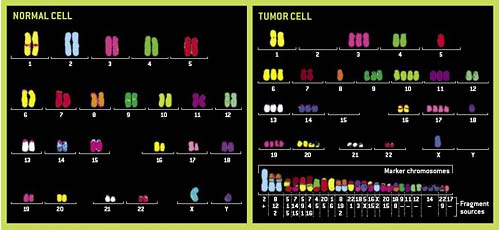
This is no surprise to University of California, Berkeley, genetics researcher Peter Duesberg, professor of molecular and cell biology. According to his novel yet controversial "chromosomal" theory of cancer, which is receiving increased attention among cancer researchers, each cancer is unique, and there is no magic bullet.

"The mutation theory of cancer says that a limited number of genes causes cancer, so cancers should all be more or less the same," Duesberg said. The chromosomal theory, which he laid out in an article in the May 2007 issue of Scientific American, implies instead that, "even if cancers are from the same tissue, and are generated with the same carcinogen, they are never the same. There is always a cytogenetic and a biochemical individuality in every cancer."

The most that can be expected from a drug, he said, is that it is less toxic to normal cells than cancer cells, and that as a result a cancer detected early can be knocked back by chemotherapy. His chromosomal theory offers hope of early detection, however, since it ascribes cancer to chromosomal disruption, called aneuploidy, that can be seen easily through a microscope.

link to full article

Wednesday, June 27, 2007

MIT locates key enzyme for reversing retardation in mice

'Elegant genetic manipulation' inhibits Fragile X symptoms

Researchers at the Picower Institute for Learning and Memory at MIT have, for the first time, reversed symptoms of mental retardation and autism in mice.

The work will be reported in the online early edition of the Proceedings of the National Academy of Sciences the week of June 25-29.

The mice were genetically manipulated to model Fragile X Syndrome (FXS), the leading inherited cause of mental retardation and the most common genetic cause of autism. The condition, tied to a mutated X chromosome gene called fragile X mental retardation 1 (FMR1) gene, causes mild learning disabilities to severe autism.

According to the Centers for Disease Control, FXS affects one in 4,000 males and one in 6,000 females of all races and ethnic groups. The prevalence of autism ranges from one in 500 to one in 166 children. There is no effective treatment for FXS and other types of autism.

link to full article

Tuesday, June 19, 2007

On the Horizon, Personalized Depression Drugs

The Human Genome should be providing more of this type of information...

Imagine that you are depressed and see a psychiatrist who explains that you have clinical depression and would benefit from an antidepressant. So far, so good. But then the doctor tells you there is a 60 percent chance that you’ll feel better with this antidepressant and that it could take as long as four to six weeks to find out, during which time you’ll probably have some side effects from the drug.

I have just described the state-of-the-art pharmacologic treatment of major depression in 2007. Don’t get me wrong; we have very effective and safe treatments for a broad array of psychiatric disorders. But in everyday clinical practice, we have little ability to predict which specific treatment will work best for you.

Laura is a case in point. A successful management consultant in her late 30s, she sought help for lifelong depression. Her treatment began with four weeks of the antidepressant Lexapro, a selective serotonin reuptake inhibitor, or S.S.R.I., without any effect. Next, I switched her to Zoloft, another S.S.R.I., since the chance of response to another member of the same drug family is about 60 percent. Again, no response. Then we moved on to Wellbutrin, an entirely different type of antidepressant, but this didn’t work either. Laura was now ready to call it quits, and who could blame her?

After nearly three months, I had still not found an effective treatment for her. Then she came in one day and said her father had recently revealed that he had been depressed and had done well on Prozac, another S.S.R.I., and she wondered if she could try it. Within three weeks, she felt markedly better, and the symptoms of her depression began to melt away.

Instead of the hit-or-miss approach I had to use with Laura, it will soon be possible for a psychiatrist to biologically personalize treatments. With a simple blood test, the doctor will be able to characterize a patient’s unique genetic profile, determining what biological type of depression the patient has and which antidepressant is likely to work best.

link to full article

Friday, June 15, 2007

Thursday, June 14, 2007

Counterfeit Toothpaste Imported From South Africa Recalled in 4 States

How difficult will this be?

WASHINGTON (AP) -- The Colgate-Palmolive Co. said Thursday that 5-ounce tubes of counterfeit toothpaste sold in discount stores in four states under a Colgate label are being recalled because they may contain a poisonous chemical.

A Food and Drug Administration official, Doug Arbesfeld, said Wednesday that testing had found the chemical in a product with the Colgate label, but said in the initial announcement that the FDA was unsure whether it really was Colgate or a counterfeit.

"We are aware that toothpaste is something that's been counterfeited in the past," he said. "We don't want to alarm people unnecessarily."

MS USA Trading, Inc. of North Bergen, N.J., the importer involved in the initial recall announcement, said the toothpaste may contain diethylene glycol, a chemical found in antifreeze.

The company said the toothpaste, imported from South Africa, was sold in discount stores in New Jersey, New York, Pennsylvania and Maryland.

"Made in South Africa" is printed on the box and includes Regular, Gel, Triple and Herbal versions.

The trading company said the problem was discovered in routine testing by the Food and Drug Administration. It said no illnesses have been reported to date.

link to full article

Wednesday, June 13, 2007

New Drugs Declining, Research Costs Increasing, GAO Says

less innovation is normally considered a bad thing...

Drug companies are becoming less innovative, with the number of new drugs being developed failing to keep pace with the substantial increases in spending on research and development, according to congressional investigators.

A report released yesterday by the Government Accountability Office, the investigative arm of Congress, found that annual research and development spending by the pharmaceutical industry increased 147 percent, to $60 billion, between 1993 and 2004. At the same time, the number of new drug applications to the Food and Drug Administration grew by only 38 percent, and it generally has declined since 1999.

What is more, about two-thirds of the new applications were for drugs that simply represent modifications to existing medicines, while 32 percent were for potentially innovative new drugs.

"Over the past several years it has become widely recognized throughout the industry that the productivity of its research and development expenditures has been declining," investigators wrote in the 52-page report. "That is, the number of new drugs being produced has generally declined while research and development expenditures have been steadily increasing."

link to full article

Monday, June 11, 2007

Penn Researchers Find Potential New Target for Type 2 Diabetes

(PHILADELPHIA) – Researchers at the University of Pennsylvania School of Medicine have discovered a potential new target for treating type 2 diabetes, according to a new study that appeared online this week in Nature. The target is a protein, along with its molecular partner, that regulates fat metabolism.

“Over the last 10 years, we have begun to understand the importance of fat metabolism in diabetes,” notes lead author Morris J. Birnbaum, MD, PhD, the Willard and Rhoda Ware Professor of Diabetes and Metabolic Diseases at Penn and an Investigator of the Howard Hughes Medical Institute. “Type 2 diabetics are at a higher risk for cardiovascular disease because they also have disorders in fat metabolism as a result of obesity and abnormal insulin action.” Birnbaum is also the Associate Director of the Type 2 Diabetes Unit for Penn’s Institute for Diabetes, Obesity, and Metabolism.

When a person eats a meal, the pancreas usually responds by secreting insulin that signals the liver to stop making glucose and burning fat. When a type 2 diabetic eats a meal, insulin cannot stop the manufacture of glucose in the liver, but it can stop the burning of fat stores. This gives the diabetic person a “double whammy:” fatty acids accumulate from food and from the liver. Consequently, more fat is deposited in tissues and obesity worsens.

Until now there was no clear connection between insulin and the control of fat metabolism. This study shows that when insulin is present, as it is after a meal, the protein Akt2/PKB adds a phosphate group to its molecular partner PGC-1a. When this happens, PGC-1a cannot activate the genes needed for fat metabolism.

link to full article

Thursday, June 07, 2007

US scientists discover new, potentially deadly bacteria

SAN FRANCISCO (AFP) - In a dramatic case of microbial sleuthing, US scientists said they have discovered a new, potentially deadly strain of bacteria previously unknown to medicine.

The bacteria was found in a 43-year-old American woman who had traveled across Peru for three weeks and suffered from symptoms similar to typhoid fever or malaria. The woman has since recovered.

Named Bartonella rochalimae, the new species is a close relative of a microbe that sickened thousands of soldiers during the First World War with what became known as trench fever, spread through body lice.

It is also related to a bacteria identified 10 years ago during the AIDS epidemic in San Francisco as the cause of cat scratch disease, which infects 25,000 people a year in the United States.

It was this previous work on cat scratch disease related to AIDS that helped experts at the University of California San Francisco (UCSF) and the US Centers for Disease Control and Prevention isolate the new bacteria found in the female traveler.

The findings are published in the New England Journal of Medicine.

Two weeks after returning to the United States from her trip to Peru, the woman experienced potentially life-threatening anemia, a rash, an enlarged spleen, insomnia and a high fever that lasted for several weeks.

link to full article

Wednesday, June 06, 2007

Philanthropic Roche shares manufacturing technology with Africa

04/06/2007 - Switzerland-based Roche is helping African nations fight the AIDS epidemic by sharing its coveted saquinavir drug-producing technology with two more manufacturers in Ethiopia and Zimbabwe.

As part of the drug giant's Technology Transfer Initiative, the Addis Pharmaceutical factory in Ethiopia and Varichem Pharmaceuticals in Zimbabwe will be provided, free of charge, with the technical expertise and guidance to manufacture generic HIV medicine, based on processes to produce saquinavir, Roche's second line HIV medicine.

The two companies join five others across Africa which have received the technology since the initiative's launch in January last year.

A Roche spokeswoman told in-PharmaTechnologist.com the scheme was like the analogy of teaching a man to fish so he could eat for a life time, rather than handing the man a fish so he can eat for the day.

By being locally manufactured, the dependency on western countries for treatment would be greatly reduced, she said.

Roche chief executive William Burns said in a statement: "These new agreements highlight the positive contribution that the Technology Transfer Initiative is making to help strengthen and expand local manufacturing capabilities for HIV medicines in Africa. Now entering its second year, the initiative reinforces Roche's commitment to find long-term, sustainable solutions to help increase access to healthcare in the world's poorest countries."

A team of Roche experts will work onsite at the manufacturing facilities in Ethiopia and Zimbabwe to help transfer the technology.

link to full article

Tuesday, June 05, 2007

Pa. hospitals, research groups split up $45M in tobacco funds

Everybody stop smoking!!!

Twenty-three area hospitals, research institutions and other health-care organizations were among the 38 Pennsylvania entities awarded a total of $45 million in health research grants from a portion of the state's tobacco industry settlement.

The money is being awarded under the Commonwealth Universal Research Enhancement program, which Gov. Ed Rendell said is designed to advance the work being conducted at Pennsylvania's leading medical and health research institutions. "This research will ultimately have a positive impact on the health of our residents," Rendell said.

The largest grant recipient was the University of Pennsylvania, which will receive $8.47 million for 10 projects that range from creating a health-services research data center to establishing a tumor tissue bank for cancer research.

Other large grants recipients include Thomas Jefferson University, which will receive $3.7 million for five projects including three aimed at developing new gene-based treatments for cancer; and $3.3 million awarded to the Children's Hospital of Philadelphia to discover and determine the underlying genetic causes of, and contributors to, a variety of childhood diseases.

link to full article

Monday, June 04, 2007

Scientist Gets Own Personal Genome Map

I want one!!!...

The Nobel Prize-winning scientist who helped discover the molecular structure of DNA has become the first person to receive his own personal genome map.

The map, a breakdown of his DNA that shows illnesses he is predisposed to contracting, is the first step in making the sequencing of individual human genomes quick, affordable and a routine part of medical care, according to researchers.

"I knew I was risking possible anxiety when I saw it," said 79-year-old James Watson, who was presented the map during a ceremony at Baylor College of Medicine. "But it's much more that if I don't sleep at night it's due to thinking about Iraq rather than about my genome."

Watson was chosen for the project because of his contributions to the field, and the map was completed after he submitted a blood sample.

link to full article

Friday, June 01, 2007

Cellular message movement captured on video

This stuff continues to amaze me...it could be, of course, that I am easily impressed...

Proper signaling step required for controlled cell growth -- otherwise, cancer and other diseases can result

Scientists have captured on video the intracellular version of a postal delivery service. Reporting in the journal Biochemical and Biophysical Research Communications (BBRC), bioengineering researchers at UC San Diego published videos of a key message-carrying protein called paxillin moving abruptly from hubs of communication and transportation activity on the cell surface toward the nucleus. Paxillin was labeled with a red fluorescence marker to make it stand out in live cells.

“It’s amazing to us. We thought the cell was so simple,” said Shu Chien, the senior author of the BBRC paper and a professor of bioengineering at UCSD’s Jacobs School of Engineering. “But it’s really very complex and I’m not sure we’re covering much as yet. We certainly don’t know all the interactions among these molecules that bring the cell into action.”

Examining living cells through a microscope, Chien and the paper’s co-author, associate project scientist Ying-Li Hu, filmed red-fluorescence-tagged paxillin molecules traveling from cells’ outer membrane along green-fluorescence-labeled traces of cytoskeleton. Even without video evidence, scientists have confirmed over the past 10 years that higher organisms use paxillin as a transmitter of locomotion and gene-expression signals from several classes of growth-factor receptors to the nucleus.


link to full article

link to University of California - San Diego

Thursday, May 31, 2007

Massachusetts' biotech plan may top peers'

Specialists: Outline hints it may be more flexible, cost-effective

By Stephen Heuser, Globe Staff | May 31, 2007

Governor Deval Patrick's proposal to inject $1 billion into medical research and biotechnology is a complex plan whose details have yet to be worked out, and it depends on the Legislature's willingness to fund it over a decade. But his strategy could also be more flexible and cost effective than competing plans in California and other states, according to policy specialists and a Globe analysis.

Patrick unveiled his Life Science Initiative this month before a packed crowd in Boston at the world's largest biotech convention, saying it would combat "competitor states and foreign nations" trolling aggressively for a piece of the state's marquee industry. He promised money for a new stem-cell bank, job training, and biomedical research, as well as tax breaks for companies hiring new workers.

Behind the $1 billion promise is a stream of money that is far from guaranteed. The Senate and House would need to find $25 million in the state budget every year for 10 years. They would also need to authorize $500 million in new bonds and write a new law making life-science companies eligible for up to $250 million in tax benefits.

"This is an initiative that's probably just starting -- that's going to require a lot of moving parts to come together to make it go," said Patrick Kelly , a vice president at the national Biotechnology Industry Organization who tracks state biotechnology policies.

link to full article

Tuesday, May 29, 2007

China sentences former drug official to death

Holy Crap!!!...

29/05/2007 - China has today sentenced to death the former director of its State Food and Drug Administration (SFDA), on charges of corruption, according to reports in the Chinese media.

The hardline approach may be an attempt by the country to demonstrate to the world its seriousness in stamping out the corruption that is reportedly rife throughout the healthcare and pharmaceutical, among other industries, and has been muddying the country's reputation, causing it to miss out on billions of dollars of foreign investment.

The death penalty was slammed on Zheng Xiaoyu by a Beijing court for taking over $850,000 (€632,000) worth of bribes in the form of cash and gifts. Incidently he also received a sentence of seven years' imprisonment for dereliction of duty.

In addition, all Zheng's personal property was confiscated and he was deprived of his political rights for life, according to media reports. His wife and son are also implicated and are still being investigated, among others who are believed to be involved.

Zheng, who reigned as China's chief drug and food official between 1997 and 2006, does, however, still have the right to appeal.

link to full article

Wednesday, May 23, 2007

Google Invests In Bio-Tech Company 23andMe

(AHN) - Google Inc. recently invested in a bio-tech company in order to help consumers further take advantage of the features the company offers.

The company, 23andMe is owned by Anne Wojcicki who married Google co-founder Sergey Brin in early May. In a statement, the company said Google is one of many companies who invested.

23andMe co-founder Linda Avey said the funding these investors will bring to the table will allow them to connect people with their genetic information, allowing them to better lead their lives. The company got $3.9 million from Google alone.

The company identifies genetic makeup in their clients like inherent traits.

Avey said, "Achieving this significant funding milestone enables us to move forward with our core mission of connecting people with their genetic information."

link to full article

A new wrinkle in evolution -- Man-made proteins

what will people think!!!

Nature, through the trial and error of evolution, has discovered a vast diversity of life from what can only presumed to have been a primordial pool of building blocks. Inspired by this success, a new Biodesign Institute research team, led by John Chaput, is now trying to mimic the process of Darwinian evolution in the laboratory by evolving new proteins from scratch. Using new tricks of molecular biology, Chaput and co-workers have evolved several new proteins in a fraction of the 3 billion years it took nature.

Their most recent results, published in the May 23rd edition of the journal PLoS ONE, have led to some surprisingly new lessons on how to optimize proteins which have never existed in nature before, in a process they call ‘synthetic evolution.’

"The goal of our research is to understand certain fundamental questions regarding the origin and evolution of proteins," said Chaput, a researcher in the institute’s Center for BioOptical Nanotechnology and assistant professor in Arizona State University’s department of chemistry and biochemistry. "Would proteins that we evolve in the lab look like proteins we see today in nature or do they look totally different from the set of proteins nature ultimately chose" By gaining a better understanding of these questions, we hope to one day create new tailor-made catalysts that can be used as therapeutics in molecular medicine or biocatalysts in biotechnology."

The building blocks of proteins are 20 different amino acids that are strung together and folded to make the unique globular shape, stability and function of every protein. The mixing and matching of the amino acid chain like numbers in the lottery are what favor the odds in nature of finding just the right combinations to help generate biological diversity. Yet no one can predict how the string of amino acids sequence folds to make the 3-D functional structure of a protein.

To select the raw ingredients to create the proteins, Chaput’s group (which includes Harvard collaborator Jack Szostak, and ASU colleagues Jim Allen, Meitian Wang, Matthew Rosenow and Matthew Smith) began their quest by further evolving a protein that had been previously selected from a pool of random sequences.

link to full article

Tuesday, May 22, 2007

The pot is calling the kettle

"extremely inefficient and therefore expensive"

I think the FDA needs to look at themselves first...and right away...

Quality must be backbone of clinical trial process, says FDA deputy

22/05/2007 - Quality needs to be built into every step of the clinical trials process, insists a leading US Food and Drug Administration (FDA) official.

There is a need for extensive standardisation and clear accountability - but also for an acknowledgment that variations do occur and can be accounted for, says Dr Janet Woodcock.

The FDA deputy commissioner and chief medical officer was addressing a recent workshop in Washington on 'Defining and Implementing Quality in Clinical Investigations from Design to Completion', held jointly by the Drug Information Association (DIA) and the FDA's Office of Critical Path Programs.

The workshop was part of the Human Subject Protection and Bioresearch Monitoring Initiative, announced by the FDA in June 2006 and focusing largely on data quality and the oversight of institutional review boards (IRBs). The initiative comes under the broader umbrella of the US agency's Critical Path programme, which aims to modernise and streamline medical product development.

The context for improving quality throughout clinical research was that, while the process generally produced high-quality data, much of the evidence needed to support modern evidence-based medicine never came through, Woodcock noted.

This was the legacy of an "extremely inefficient and therefore expensive" system, in which regulatory burdens and the lack of a stable infrastructure limited the number of clinical questions that could be pursued. Fraud was rare, Woodcock claimed, but when it occurred it might go undetected for some time, tarnishing the reputation of "the research enterprise" and eroding trust when it was eventually discovered.

link to full article

Monday, May 21, 2007

Luck of the Irish brings new biologics base

The Irish job machine rolls on...

21/05/2007 - Proposals for the construction of a new small-scale biologics manufacturing plant in Ireland courtesy of pharma heavyweight Pfizer emerged late last week.

The company is considering investing in a site in Shanbally, County Cork, right next to its existing active pharmaceutical ingredient (API) plant in Ringaskiddy, at an estimated cost of €175m.

While the plans are still at a very early stage, with the company having only just applied for planning permission at the site, it will come as welcome news to the area which only three months ago was dealt a blow when Pfizer announced it would be cutting jobs and capacity at the Ringaskiddy API plant.

The new facility is due to be used for Phase III clinical trial products and initial product launches, and will follow the trend of many biologics manufacturers by using disposable technologies to ensure maximum flexibility in production.

Although the plans have yet to officially receive the seal of approval and proposals are technically still pending, the move would fit nicely with Pfizer's recent attempts to expand its presence in the growing biologics market.

The fact that the company has also pushed ahead with attempts to gain planning permission before the plant proposal has even been approved internally is perhaps somewhat telling, illustrating the urgency and importance the firm now lays on the role biologics could have in its future.

link to full article

Friday, May 18, 2007

Growing Nerve Cells in 3-D Dramatically Affects Gene Expression

PROVIDENCE, R.I. [Brown University] — When it comes to growing cells in a lab, technique matters. A new Brown University study shows that nerve cells grown in three-dimensional cultures use 1,766 genes differently compared to nerve cells grown in standard two-dimensional petri dishes.

The study, published in the May issue of Tissue Engineering, adds to a growing body of research showing that culture techniques can significantly affect cell growth and function. This research shows that cells grown in a laboratory in 3-D environments, not in flat petri dishes, are more like cells grown in the ultimate 3-D environment – the human body.

“More and more, we’re seeing evidence that cells cultured in three dimensions look and behave more like cells in your body,” said Diane Hoffman-Kim, the Brown bioengineer who spearheaded the new study, “so culture method is critical. If you want to better understand how the human body behaves or how new drugs might fight disease, 3-D may be a better bet.”

For more than 100 years, scientists have grown human cells in flat dishes. In these 2-D glass incubators, better known as petri dishes, cells stick to the bottom and spread out as they multiply. But in the body, cells don’t grow that way. They are suspended in fluids and gels and surrounded by other cells. And these cells aren’t stuck; they move.

As a result, some scientists suspect that hothouse cells do not behave like in vivo varieties. This means that the critical functions scientists are trying to understand by studying these cells – from the proliferation of cancer to the bacterial assault by antibiotics – may play out differently. Studies indeed show differences in behavior between cells cultured in 2-D and in 3-D. Cells cultured in 3-D, for example, grow faster.

link to full article

Wednesday, May 16, 2007

Vaccine grant to protect millions from yellow fever

Bill and Melinda Gates strike again...

GENEVA (Reuters) - More than 48 million people in West Africa will be immunized for yellow fever over the next four years under a new vaccine programme announced on Wednesday by the public-private GAVI Alliance.

Mass vaccination campaigns from the 1940s to the 1960s nearly wiped out yellow fever in Africa, but a drop-off in immunizations caused a resurgence in the hemorrhagic disease that health experts fear could trigger epidemics in urban areas.

Yellow fever, whose symptoms can include fever, vomiting and bleeding from the mouth, nose and eyes, infects some 200,000 people a year, killing around 30,000, mostly in Africa.

The $58 million grant from the Global Alliance for Vaccines and Immunization (GAVI) will support vaccinations against the viral disease spread by mosquitoes in the world's most-affected countries: Benin, Burkina Faso, Cameroon, Cote d'Ivoire, Ghana, Guinea, Liberia, Mali, Nigeria, Senegal, Sierra Leone and Togo.

It will also create a stockpile of 11 million doses of the vaccine to prevent outbreaks and manage epidemics, according to the Swiss-based GAVI, whose partners include governments, drugmakers, the World Health Organization, the World Bank and the Bill & Melinda Gates Foundation.

link to full article

Monday, May 14, 2007

Quality is free...

it's the non-conformances that cost money...

check out philip crosby...

do you think 634 million will get their attention?...

Purdue Frederick pleads guilty in OxyContin case

NEW YORK (Reuters) - Purdue Frederick Co. and three individuals pleaded guilty to charges of misbranding prescription painkiller OxyContin and will pay more than $634.5 million in penalties, the U.S. Justice Department said on Thursday.

The company pleaded guilty to felony misbranding of OxyContin with the intent to defraud and mislead, while its president, chief legal officer and former chief medical officer pleaded guilty to a misdemeanor charge of misbranding, the government said in a statement.

The Stamford, Connecticut-based company and the three admitted that they falsely claimed OxyContin was less addictive, less subject to abuse, and less likely to cause withdrawal symptoms than rival pain medications.

"Purdue (Frederick) put its desire to sell OxyContin above the interests of the public," Assistant Attorney General Peter Keisler said in a statement. "Purdue abused the drug approval process which relies on drug manufacturers to be forthright in reporting clinical data and, instead, misled physicians about the addiction and withdrawal issues involved with OxyContin."

link to full article

Thursday, May 10, 2007

Senate Approves Bill On Drug Monitoring

I'm surprised this wasn't the FDA charter all along...

"The bill calls for a fundamental change in the philosophy and operations of the drug agency, requiring it to focus on the entire life cycle of a drug — not just the years before its approval — as well as the experience of patients who later take it."- Biospace.com

The Food and Drug Administration would have to establish new systems to monitor the safety of medicines after they hit the market and for the first time could fine drugmakers for false or misleading advertising under a bill approved yesterday by the Senate.

The provisions are part of a major bill to reauthorize the current system that charges drugmakers hundreds of millions of dollars in fees each year to pay for speeded-up reviews of prospective new drugs. The government's authority to levy those fees will expire Sept. 30 unless Congress acts before then. The House has not yet taken up similar legislation.

Senators approved the measure 93 to 1, with Bernard Sanders (I-Vt.) casting the dissenting vote

link to full article

Tuesday, May 08, 2007

Amgen opens Indian office

Amgen, the world's largest biotechnology company, is betting big on India. The California-based biotechnology company with sales in excess of $12 billion is setting up an office in India with the aim of testing its drugs in the country and exploring opportunities for tie-ups.

"Amgen is currently forming local affiliate companies in Mumbai and Hong Kong that will have the capability to conduct clinical trials in India and East Asia.

Amgen's affiliate in Mumbai will support the company's clinical trials to take place in India," Mary Klem, Associate Director, Amgen, told Hindustan Times in an e-mailed response.

Industry sources said the company, which banks on innovation to develop therapeutic drugs, is also looking at partnerships that might lead to potential takeovers, though the company refused to divulge details on future plans.

"Amgen is contracting with partners in India and China for services to support its R&D (research and development) operations, including research, pre-clinical development, data management support and statistical programming," the e-mail said. Amgen has an annual research budget of $1.3 billion.

link to full article from Hindustan Times

Monday, May 07, 2007

Biotech industry to touch $5 bn in three years

in India, that is...

NEW DELHI: The domestic biotechnology sector, which closed at $1.5 billion mark in 2005-06, is expected to touch $5 billion by 2010. The sector is growing at a CAGR of 35%. Biotechnology by definition is the exploitation of biological process for industrial and other purpose.

At present, India has over 300 biotech firms focusing on different aspects of value chain and their number is going to be more than double in next three to four years, says a release from Assocham.

In a Paper by Assocham on Biotechnology Future, it has been pointed out that although clearly much smaller in size than the IT and BPO sector, the domestic biotech sector is witnessing similar growth and growth prospects. For instance during FY 05-06, the sector closed at around $1.5 billion, and grew by 35% for the second year in a row.

According to a release, Assocham president Venugopal N Dhoot said, Bio pharma in 2005-06, the largest segment of biotech industry grew by 32% to $1 billion. Exports were at $763 million, and accounted for 52% share of total industry’s revenues. Bio pharma accounted for 75% of the total exports and 70% of domestic sales.

link to full article

Sunday, May 06, 2007

The FDA is under a lot of pressure lately...

and rightly so…based on some of the news I've been reading lately...

Not only on the “Big D” side, drug safety, and efficacy, imports, but also on the “Big F” side of the house…, food imports, food safety…it goes on and on.

I really can’t comment on the food inspection functions as I have limited experience with those processes, and I will leave safety and efficacy to the experts…assuming there are any experts anyway…but that’s another whole issue.

It is my experience that overall the GMP manufacturing side of FDA regulation works pretty much as advertised…companies are supposed to manufacture products in a “state of control”…the FDA periodically inspects the process to spot check conformance with requirements…deviations are noted and addressed…it all sounds pretty much like that’s what should happen, and that’s a good thing…

When companies do not maintain control of the manufacturing process, they face an escalating series of comments and sanctions from the FDA…minor comments are addressed on an on-going basis, more serious issued are cited, companies find them selves facing consent decrees, serious fines, or even orders to cease and desist for serious violations.

I have two basic comments on the whole situation…

One, the process works, if you are out of control, the FDA will catch you…a glimpse at their websites will give you a listing of latest citations and descriptions of the situation…Companies respect, or more likely, fear FDA inspections and it keeps them on their toes…of course there are some horror stories to be told…most people working on the manufacturing side have their favorite “let me tell you how unreasonable the FDA is…” story…

Two, it is scary how out of control you have to be before the FDA catches you…

Follow-up: why don’t drug companies learn from big fines?

Friday, May 04, 2007

Big bucks for BMS Project

Construction has finally begun on Bristol-Myers Squibb's (BMS) new biologics manufacturing facility in Massachusetts, with the company upping its original investment estimates for construction from $660m (€485.7m) to $750m.

The project represents the single largest capital investment in the history of the company, according to BMS CEO Jim Cornelius, and is said to reflect the growing role the company believes biologics will play in the future of the company. The firm has previously estimated potential long-term investments in the site to reach as much as $1.1bn.

Despite the $90m jump in the budget, a spokesperson for the company said that there was no single factor responsible for the increase, and the it was always expected that original estimate would fluctuate somewhat once BMS had a better sense of the scope of the project.

Although original plans were for construction of the plant to begin in September last year, in February the company was still confident that its original time scales would still be met, with submission for regulatory approval timed for 2010 and operations at the site beginning in 2011.

The large-scale manufacturing plant in Devens, Massachusetts will be a multi-product bulk facility that is modular in design so as to accommodate any future expansion. The first phase of construction will involve four main buildings, including the manufacturing structure which will house six 20,000-litre cell culture vessels and one purification train. The facilities are due to be operationally complete in 2009.

link to full article

Wednesday, May 02, 2007

New hope for TB with nano drug delivery

"nanoparticles are submicron-sized polymeric colloidal particles within which the therapeutic agent is encapsulated, or adsorbed or conjugated into the surface..."

What? Oh, well, I'm just glad to see progress with a new technology...

South African researchers have provided a glimmer of hope for the millions of people in the developing world struck down by tuberculosis (TB) by developing a nano-sized drug delivery platform that could make all the difference in the battle against drug resistant forms of the disease.

The consortium of researchers, lead by the Council for Scientific and Industrial Research (CSIR), has successfully managed to encapsulate four first-line anti-TB drugs within a nano-sized polymeric shell, which could revolutionise the delivery of TB drugs and have a significant impact on the efficacy of therapeutic treatments in developing countries.

One of the major advantages of the new technique is that it would reduce the drug regimen for TB sufferers from four different drugs every day for up to six months, to a single treatment every seven days for just six weeks.

"The difficulty in treating TB results from patient non-compliance to the treatment regime," lead researcher on the project at CSIR, Dr Hulda Swai, explained to in-PharmaTechnologist.com.

link to full article